A Powerful Map for Effective Coaching – The E-Scale Process
So how exactly does the E-Scale coaching map empower you as a coach? What are the resources and “tools” that allow you to bring the best of your existing coaching experience and skills to a systematic process of developing your clients’ emotional intelligence?
Getting to the Core of Effective Coaching – E-Scale Reports
The E-Scale reports, from the outset, create a solid foundation for the coaching conversation. Often coaching can take a long time to get the client’s core issues and patterns. The reports are not intended as the final word on the client’s development, but they do immediately focus the client and the coaching conversation on ‘trigger’ themes, drivers and behaviours that the client can be encouraged to reflect on. But report results in themselves are not the coaching process. The E-Scale system therefore provides a comprehensive manual with a detailed map for ‘debriefing’ or processing the report content. This shifts assessment results immediately towards a change and development process.
Navigating the Effective Coaching Landscape – The E-Scale Accreditation Programme Manual
The E-Scale accreditation manual is a comprehensive 160 page document with content ranging from the E-Scale’s theoretical background, case studies and research reports, to in-depth descriptions of the 9 behavioural styles identified by the E-Scale, and bespoke guidelines for effective report debriefing and coaching for each of the 9 styles.
Particularly useful in the manual is the section on “Navigating the E-Scale Debriefing Session”. As the heading implies, coaches are provided with a detailed framework for navigating the report debrief/feedback session in a way that seamlessly shifts assessment results into a coaching conversation. Below is a copy of the “Navigating the Debrief Process” diagram that outlines the debriefing process, which is described in more detail by the rest of the manual:
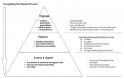
A simple but powerful coaching technique that shifts the E-Scale report results into a dynamic coaching conversation is what the manual describes as “exploring specific behavioural examples”. The aim here is to ask the client to identify prominent themes/patterns from their E-Scale report and to describe, in detail, an example of when this theme/pattern emerged. With step-by-step guidance from the manual the coach helps the client bring to awareness the real motivations, emotional drivers and consequences of their behaviour as reflected by the report. The manual provides specific ‘questions sets’ that help you and the client explore the patterns in terms of context, thoughts, feelings, actions/non-actions, outcomes, and thoughts/feelings after the event.
This in-depth exploration of the behavioural example often results in “aha moments” – the moments that we as coaches work so hard to facilitate. Clients’ eyes are opened to what was previously habitual and unconscious. This opens up the possibility of conscious choice and change.
The E-scale reports and manual then go on to provide a number of developmental exercises and suggestions for growth specific to the client’s personality/behavioural style. Furthermore, the E-Scale Coaching Report gives the coach a range of suggestions for coaching and development specifically tailored to the client’s profile.
The E-Scale reports, accreditation manual and the client’s immediate engagement in the report debriefing, combined with your existing coaching skills, experience and knowledge, makes for a powerful and effective coaching map and a journey of deep change.
I hope this has given you a feel for what the E-Scale map can make possible in your coaching. To experience this powerful map for effective coaching why not sign up for the free profile and coaching session if you have not done so already?
style="display:inline-block;width:468px;height:60px" data-ad-client="ca-pub-3189243250333212" data-ad-slot="9223793461"> Page 3 of 3 | Previous page